
Are Dental Implants Safe?
Yes — dental implants are one of the most predictable procedures in modern dentistry, with success rates around 98%. They have been in routine clinical use for decades, and the titanium and zirconia used are well established as biocompatible. That does not make them risk-free, and it does not make everyone a candidate. Both of those deserve a straight answer, which is what this page is for.
On this page
Are dental implants safe?
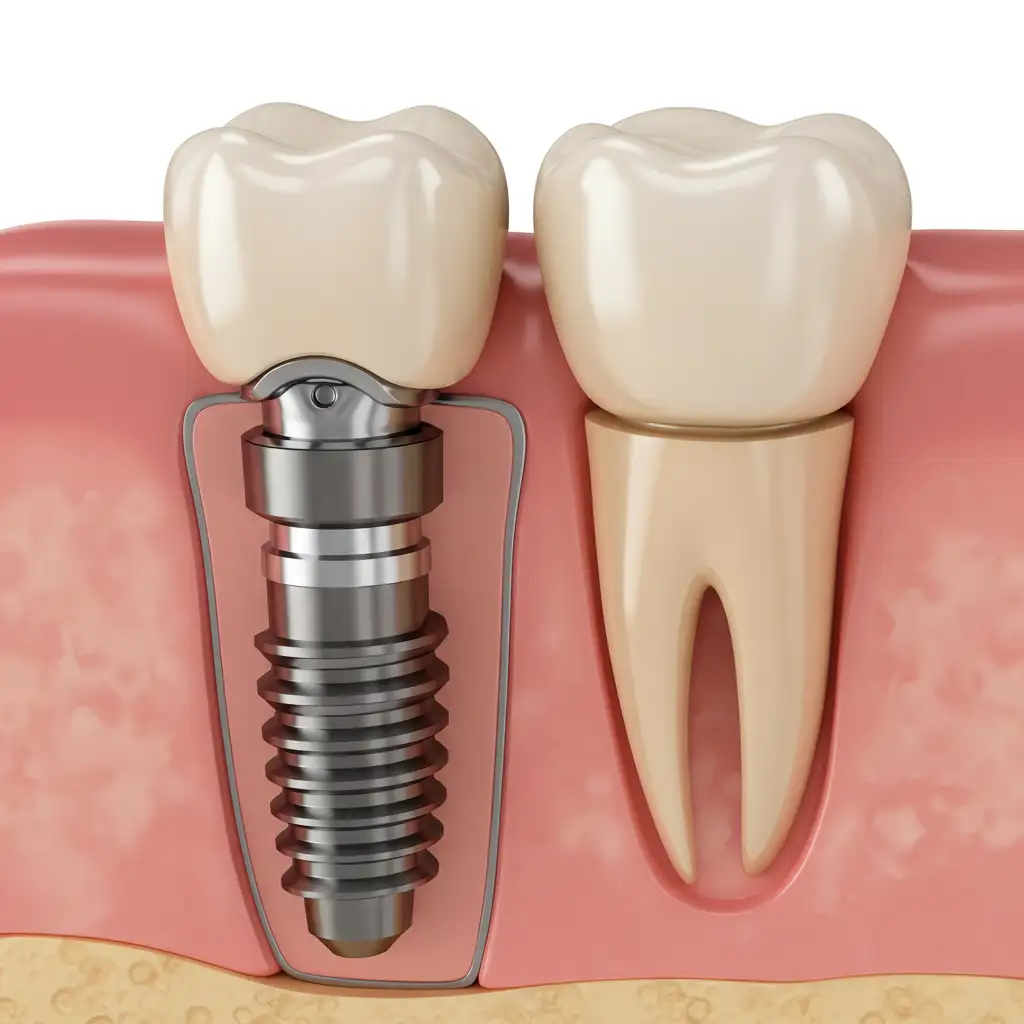
For a healthy adult with enough bone and well-controlled general health, yes. A dental implant is a small titanium or zirconia post placed into the jawbone to replace the root of a missing tooth. Bone grows against its surface over a period of months — a process called osseointegration — and a crown is then attached to it.
The procedure has a long clinical track record and success rates commonly reported around 98%. Implants are also the only tooth replacement that preserves the jawbone, because they transmit chewing force into the bone in a way bridges and dentures do not.
Why the safety record is strong
Three things account for it. The materials are inert and biocompatible, and have been studied over decades of use. The procedure is planned in advance, increasingly with 3D imaging that shows bone volume and the position of nerves and sinuses before anything is placed. And the failure mode is generally recoverable — an implant that does not integrate can usually be removed and the site re-treated, which is not true of every dental procedure.
The real risks, stated plainly
A high success rate is not a guarantee, and a page that only lists benefits is not being useful. The genuine risks are:
- Failure to integrate. The implant does not bond with the bone and has to be removed. This is the most common complication and is usually identified within the first few months.
- Infection at the site. Peri-implantitis is inflammation and bone loss around an implant, driven largely by plaque. It is the leading long-term threat.
- Nerve injury. Rare, and largely avoidable with proper imaging and planning, but it can cause lasting numbness or altered sensation in the lip or chin.
- Sinus complications. Relevant to upper back implants, where the sinus floor sits close to the bone. Also a planning issue.
- Mechanical problems. Screws loosening, or a crown chipping. Usually straightforward to fix.
Most of these trace back to either planning or plaque control. That is a useful thing to know, because both are things you and your dentist can actually influence.
Who is a good candidate?
The general requirements are enough jawbone to hold the implant, healthy gums, reasonable general health, and a commitment to keeping the area clean. Bone can often be rebuilt with grafting where volume is short, so a previous no is not always a permanent one.
Age on its own is not a barrier. Adults in their seventies and eighties have implants placed routinely. Growing jaws are the exception — implants are generally not placed in adolescents until growth is complete.
Health conditions that change the answer
| Factor | Effect on implant success |
|---|---|
| Smoking | The largest modifiable risk. Significantly raises failure and peri-implantitis rates. |
| Uncontrolled diabetes | Impairs healing. Well-controlled diabetes is generally not a barrier. |
| Active gum disease | Must be treated first, or the same bacteria will attack the implant site. |
| Grinding or clenching | Mechanical overload. Usually managed with a nightguard rather than being a disqualifier. |
| Certain bone medications | Some drugs for osteoporosis and cancer affect bone healing. Disclose everything you take. |
| Head and neck radiotherapy | Affects healing in irradiated bone. Needs specialist assessment. |
The pattern here is worth noticing: most of these are about healing capacity and infection control, not about the implant itself. Treating gum disease first is not an upsell — placing an implant into an actively infected mouth is how implants fail. If that applies to you, periodontal treatment comes first.
Is titanium safe in the body?
Titanium has been used in orthopaedic and dental implants for decades and is regarded as highly biocompatible. True allergy to titanium is considered rare. Where a patient has a documented sensitivity or simply prefers a metal-free option, zirconia implants are an established alternative.
If you have a known metal sensitivity, say so during the consultation rather than after. It changes the material choice, not usually the plan.
Why implants fail when they fail
Early failure, in the first weeks to months, is typically a healing problem — smoking, infection at placement, insufficient bone, or too much force on the implant before it has integrated.
Late failure, years later, is almost always peri-implantitis: plaque accumulating around the implant, inflaming the gum and dissolving the supporting bone. An implant cannot decay, which leads some people to assume it needs less care. The opposite is closer to the truth — the tissue around it still needs daily cleaning and regular professional cleanings, because that tissue is what holds the implant in.
How the risk compares to the alternatives
The comparison that matters is not implant versus nothing. It is implant versus bridge, versus denture, versus leaving the gap.
A bridge requires cutting down the healthy teeth on either side. A removable denture rests on the gums and does nothing to stop the bone underneath from shrinking. Leaving a gap allows neighbouring teeth to drift and the opposing tooth to over-erupt, and the bone in that area recedes over time. Every option carries a cost; the implant concentrates its risk into a surgical procedure with a high success rate, while the others spread theirs out over years.
Talking it through in Plantation
Dr. Lance Kamel has been placing and restoring implants for patients across Plantation and West Broward. A dental implant consultation includes imaging to assess your bone, a review of your medical history, and a clear written estimate before anything is decided. If implants are not the right answer for your situation, that is what we will tell you.
Frequently asked questions
What is the success rate of dental implants?
Are dental implants safe for seniors?
What is the most common problem with dental implants?
Can your body reject a dental implant?
Does getting a dental implant hurt?
Do dental implants set off metal detectors?
How long do dental implants last?
Can you get an implant if you smoke?
Related reading
- Are implants covered by insurance?
- Dental implants in Plantation: benefits and cost
- Can you switch from dentures to implants?
Sources
This page is general education, not personal dental advice. Whether implants are safe for you depends on your own medical history, medications and bone, which need assessing in person.
Local Competitors
While we aim to provide comprehensive care for dental implants here at our Plantation office, we understand you may want to explore multiple options. Here are a few local competitors that also offer implant services:
- Luxe Dental – Dental Implants in Lauderhill
- Beach Smile – Dental Implants in North Miami
- Family Dentistry Naples – Dental Implants in Naples
- Family Cosmetic Dentistry – Dental Implants in Weston
- Tooth Fairy Workshop – Dental Implants in Hollywood
- All Smiles Dentistry – Dental Implants in Miami Gardens
- Sedation Dental Spa – Dental Implants in Miramar
Each office may have different financing plans, insurance policies, and approaches to dental implant placement, so it’s worth comparing their services to find the best fit for your needs.
You Might Also Like This Posts
- Can you go from wearing dentures to getting implants
- Benefits of Dental Implants in Plantation
- FAQs on Take Home Teeth Whitening Trays
- Top Tips for Making Your Dentures Last
- When Your Dentist May Recommend Implant Supported Dentures
Categories
- Blog
- Cosmetic Dentistry
- Dental Health
- Dental Implants
- Dentures
- Oral Surgery
- Smile Restoration
- Teeth Whitening
Considering dental implants in Plantation?
Dr. Lance Kamel offers free consultations and clear pricing at Luxe & Kamel Dentistry on W Sunrise Blvd. Learn about dental implants or dentures, or book an appointment.
Book a visit
Questions about your smile?
Call us or request an appointment and our team will help you find the right treatment — with clear pricing.
Dr. Lance Kamel, DDS
8269 W Sunrise Blvd, Plantation, FL 33322
Mon–Wed 9am–5pm · Thu 11am–7pm · Fri 9am–2pm
Request an appointment
Leave your details and our team will call you to schedule.
This site is protected by reCAPTCHA and the Google Privacy Policy and Terms of Service apply.