
Are Dental Implants Covered by Insurance?
Most dental plans cover part of an implant, and very few cover all of it. A typical plan pays a percentage of the crown and sometimes the abutment, applies an annual maximum of around $1,000 to $2,000, and may exclude the implant post itself as a “missing tooth” or major service. The total is usually split across several billing codes, which is why a straight yes-or-no answer is rarely accurate.
On this page
Are dental implants covered by insurance?
Partially, in most cases. Coverage for implants has improved considerably over the past decade — plans that once excluded them outright now often classify them as a major restorative service — but partial coverage is the norm and full coverage is rare.
The practical result for most patients is that insurance meaningfully reduces the bill without coming close to eliminating it, usually because the annual maximum runs out before the treatment is finished.
Why an implant is billed in parts
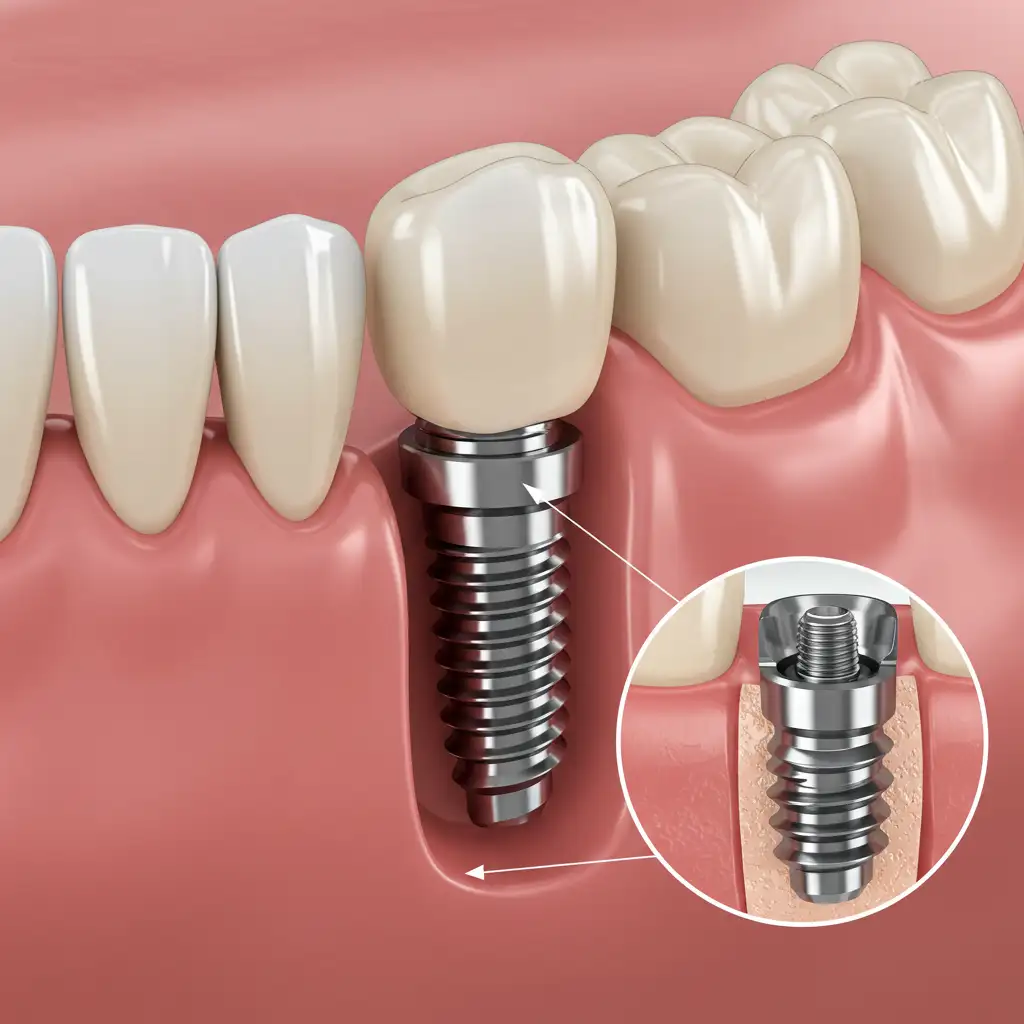
What patients think of as “an implant” is three or four separate procedures, each with its own code and often its own coverage level:
| Component | What it is | How plans usually treat it |
|---|---|---|
| Implant post | The titanium post placed in the jaw | Most likely to be limited or excluded |
| Abutment | The connector between post and crown | Sometimes covered as a major service |
| Crown | The visible tooth | Most likely to be covered, often around 50% |
| Extraction | Removing the failing tooth, if needed | Commonly covered as basic or oral surgery |
| Bone graft | Rebuilding bone volume before placement | Variable; often needs pre-authorisation |
This is why a plan can honestly say it “covers implants” and still leave a large balance — it may be covering the crown at 50% and nothing else.
The clauses that decide your answer
- Annual maximum. Often $1,000–$2,000. Implant treatment routinely exceeds it, and the maximum resets each plan year.
- Missing tooth clause. Excludes replacing a tooth that was already missing before your coverage began. One of the most common reasons a claim is denied.
- Waiting period. Major services often have a six to twelve month waiting period on a new plan.
- Least expensive alternative treatment. The plan pays only what a bridge or denture would have cost, and you cover the difference.
- Frequency limits. Restrictions on how often a given restoration is replaced.
- Downgrades. Paying at the rate of a lower-cost material regardless of what is placed.
The missing tooth clause and the least-expensive-alternative clause are the two that surprise people most, and neither is visible in a summary of benefits. Both live in the full plan document.
When medical insurance applies
Occasionally, medical rather than dental insurance is the relevant policy. It is worth exploring when tooth loss resulted from an accident or injury, when the work follows treatment for oral cancer, when there is a congenital condition affecting tooth development, or when implants are needed to manage a documented medical problem.
These claims usually require documentation and pre-authorisation, and they are refused more often than dental claims. They are worth pursuing in the specific circumstances above and not worth pinning hopes on otherwise.
What to ask your plan, word for word
- “Does my plan cover implant procedure codes, and at what percentage?”
- “Is there a missing tooth clause, and does it apply to this tooth?”
- “What is my remaining annual maximum for this plan year?”
- “Is there a waiting period for major services, and have I completed it?”
- “Does a least expensive alternative treatment clause apply to implants?”
- “Are the abutment and crown covered separately from the implant post?”
- “Is a bone graft covered, and does it need pre-authorisation?”
Ask for a pre-treatment estimate in writing before starting. Your dentist submits the planned codes and the insurer responds with what it will pay. It is the only way to know your real number in advance, and it costs nothing but time.
Ways to lower what you pay
- Split treatment across two plan years. Placement late in one year and the crown early in the next uses two annual maximums. The healing period often makes this natural rather than artificial.
- Use an FSA or HSA for the balance, with pre-tax dollars.
- Ask about financing. Many practices offer interest-free plans over a fixed term.
- Get the pre-treatment estimate so nothing is a surprise mid-treatment.
- Do not delay an extraction that is needed. Waiting can lead to bone loss that adds a graft — and a cost — that was avoidable.
That last point is the one that most often costs people money. Bone begins to resorb once a tooth is gone, and a graft is a significant addition to the bill.
Getting a real number in Plantation
At Luxe & Kamel Dentistry we provide a written estimate before treatment starts and help you use your benefits. Dr. Lance Kamel offers a free implant consultation, which includes imaging to assess bone and a breakdown of what your plan is likely to cover. See our dental implants page for what the treatment involves, or start with our new patient visit.
Frequently asked questions
Are dental implants covered by insurance?
What is a missing tooth clause?
Does medical insurance ever cover dental implants?
How can I find out what my plan will actually pay?
Can I split implant treatment across two years to use two maximums?
Does insurance cover bone grafts for implants?
What does “least expensive alternative treatment” mean?
Is an implant worth it if insurance covers little of it?
Related reading
- Are dental implants safe?
- Dental implants in Plantation: benefits and cost
- Implant-supported dentures: who they suit
Sources
This page is general education, not insurance advice. Coverage varies by plan and employer. Figures quoted are typical ranges, not a quote — check your own policy documents and request a written pre-treatment estimate.
Local Competitors
While we aim to provide comprehensive care for dental implants here at our Plantation office, we understand you may want to explore multiple options. Here are a few local competitors that also offer implant services:
- Luxe Dental – Dental Implants in Lauderhill
- Beach Smile – Dental Implants in North Miami
- Family Dentistry Naples – Dental Implants in Naples
- Family Cosmetic Dentistry – Dental Implants in Weston
- Tooth Fairy Workshop – Dental Implants in Hollywood
- All Smiles Dentistry – Dental Implants in Miami Gardens
- Sedation Dental Spa – Dental Implants in Miramar
Each office may have different financing plans, insurance policies, and approaches to dental implant placement, so it’s worth comparing their services to find the best fit for your needs.
Frequently Asked Questions (FAQs)
Are dental implants generally more expensive than other replacements like bridges?
Can I use my health insurance instead of dental insurance for implants in Plantation, FL?
Do local specialists in Plantation offer payment plans if my insurance won’t cover the full cost?
How do I check if my plan includes dental implants?
Understanding whether dental implants are covered by insurance can feel overwhelming, but it doesn’t have to be. By knowing the basics—like checking your plan’s coverage, potential annual limits, and financing opportunities—you can make an informed decision that suits both your smile and your wallet.
If you’re considering dental implants in Plantation, our team is here to help answer your questions and guide you through the insurance and financing process. You can reach us at (954) 472-2000 or visit our office at 8269 W Sunrise Blvd, Plantation, FL 33322 for a consultation. Feel free to check out our contact page to schedule an appointment or learn more about our services. We’d love to help you achieve a beautiful, confident smile!
You Might Also Like
Considering dental implants in Plantation?
Dr. Lance Kamel offers free consultations and clear pricing at Luxe & Kamel Dentistry on W Sunrise Blvd. Learn about dental implants or dentures, or book an appointment.
Book a visit
Questions about your smile?
Call us or request an appointment and our team will help you find the right treatment — with clear pricing.
(954) 472-2000Dr. Lance Kamel, DDS
8269 W Sunrise Blvd, Plantation, FL 33322
Mon–Wed 9am–5pm · Thu 11am–7pm · Fri 9am–2pm
Request an appointment
Leave your details and our team will call you to schedule.
This site is protected by reCAPTCHA and the Google Privacy Policy and Terms of Service apply.