
Can you go from wearing dentures to getting implants
Yes — switching from dentures to implants is one of the most common transitions in restorative dentistry. The question is rarely whether it is possible, but how much jawbone is left to work with. Bone shrinks steadily under a denture, so the answer depends more on how long you have worn one than on anything else.
On this page
Can you go from wearing dentures to getting implants?
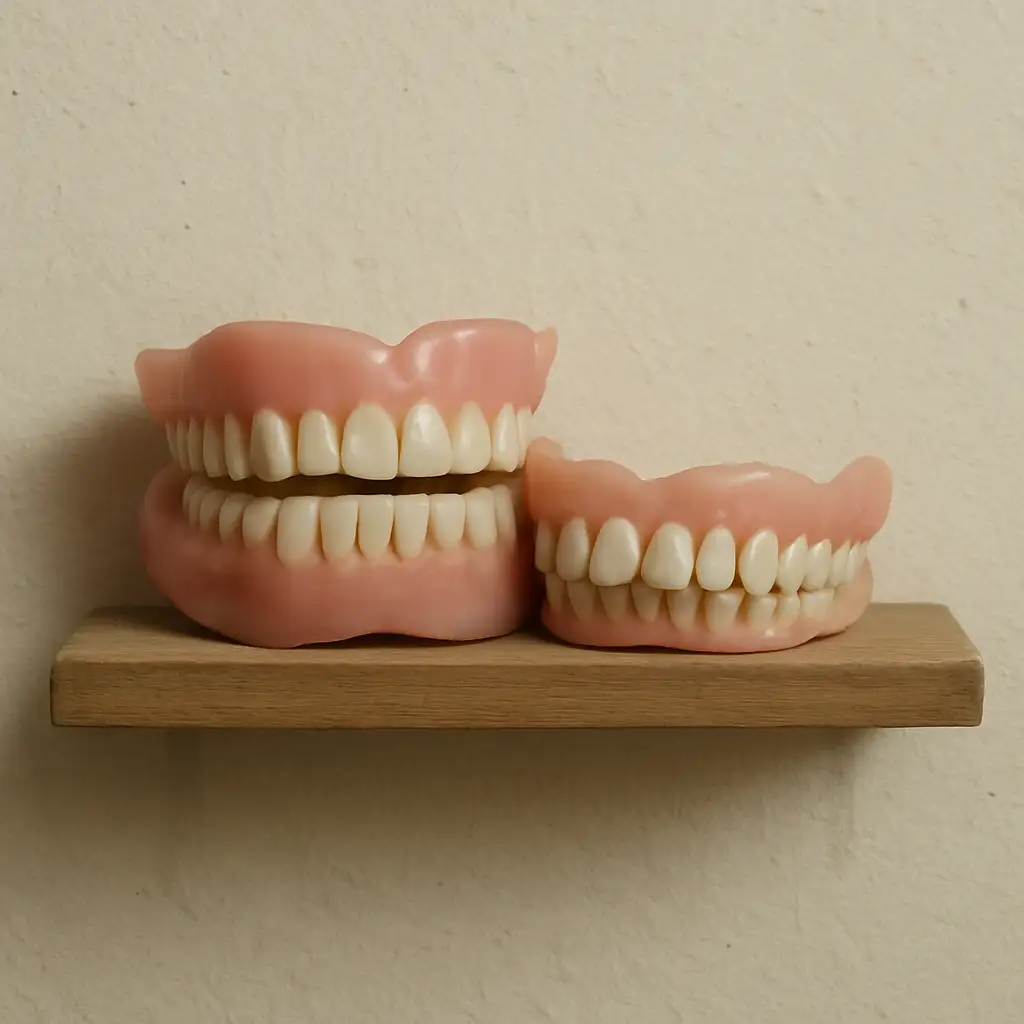
You can, and many people do. Years of denture wear do not disqualify you. What they do is change the starting point, because a conventional denture rests on the gum and transmits no force into the bone underneath. Without that stimulation, the ridge resorbs — slowly, continuously, and most noticeably in the lower jaw.
So the honest framing is this: the transition is very achievable, and it generally gets harder the longer it is postponed. If you have been thinking about it, an assessment now tells you more than an assessment in three years will.
The bone question
The first step is always imaging — usually a 3D cone beam scan that shows the height and width of bone available and the position of nerves and sinuses. There are three broad outcomes.
Enough bone. Implants can be placed directly. This is more common in the upper front region and in people who have worn dentures for a shorter time.
Not quite enough. Bone grafting rebuilds volume, or angled implants are used to reach areas where bone remains. This adds time and cost but is routine.
Substantially reduced bone. More involved reconstruction may be needed, or a full-arch approach designed specifically to work with limited bone.
Very few people are told nothing can be done. Most are told what the path looks like and what it costs.
Your options, from fewest implants to most
| Option | Implants per arch | Removable? | Best suited to |
|---|---|---|---|
| Implant-retained overdenture | 2–4 | Yes, snaps in and out | Stopping a lower denture moving, at lower cost |
| Implant-supported overdenture | 4 | Yes | More support and chewing force, still removable |
| Fixed full-arch bridge | 4–6 | No, stays in permanently | The closest feel to natural teeth |
| Individual implants | Varies | No | Replacing specific teeth rather than a whole arch |
The lower jaw is where people feel the difference most. Lower dentures have the least natural stability, and even two implants anchoring one can transform day-to-day eating for a fraction of the cost of a fixed arch.
What the process involves
- Consultation and 3D imaging to assess bone, review your medical history and set out the options with costs.
- Any preparatory work — treating gum disease, removing remaining failing teeth, or grafting where bone is short.
- Implant placement, done under local anaesthetic, with sedation available.
- Healing and integration, typically three to six months while bone bonds to the implants. You are not left without teeth — a temporary denture is usually worn or a provisional fitted.
- The final restoration — your new denture is connected, or a fixed bridge is fitted.
Total time commonly runs six to nine months when grafting is involved, less when it is not.
Is it worth it?
The arguments in favour are concrete rather than cosmetic. Chewing force improves substantially compared with a conventional denture. The appliance stops moving, which removes the constant low-level management of adhesive and food avoidance. The palate can often be left uncovered on an upper denture, which restores much of the taste and temperature sensation that a full plate blocks. And because implants load the bone, they slow the resorption that caused the problem.
The arguments against are equally concrete: higher upfront cost, a surgical procedure, a months-long timeline, and a requirement for meticulous cleaning afterwards. It is a real decision with real trade-offs, not an obvious upgrade.
Who is not a good candidate
Uncontrolled diabetes, active gum disease that has not been treated, heavy smoking, certain bone medications and a history of radiotherapy to the jaw all affect healing and need assessing individually. Most are modifiable or manageable rather than absolute barriers — smoking cessation and gum treatment change the picture, for instance.
If implants turn out not to be right for you, a well-made new conventional denture with a proper reline schedule is a legitimate outcome, not a consolation prize.
Talking it through in Plantation
Dr. Lance Kamel offers a free implant consultation with imaging, so you can find out what your bone allows before committing to anything. See our dental implants page for the treatment detail, or our dentures page if you are weighing a new denture against the switch.
Frequently asked questions
Can you get dental implants after wearing dentures for years?
How much bone do you need for dental implants?
Can my existing denture be converted to snap onto implants?
How many implants are needed for a lower denture?
Will I be without teeth during treatment?
How long does the whole process take?
Is it too late if I have worn dentures for 20 years?
Do implant-retained dentures still come out for cleaning?
Related reading
- Are dental implants safe?
- Implant-supported dentures: who they suit
- Dental implants in Plantation: benefits and cost
Sources
This page is general education, not personal dental advice. Whether implants suit you depends on your bone, medical history and medications, which need assessing in person.
Other Dental Offices in Nearby Cities
If you happen to be visiting nearby cities and need quality dental care, here are a few reputable offices to consider.
- Luxe Dental — Dentist in Lauderhill
- Beach Smile — Dentist in North Miami
- Family Dentistry Naples — Dentist in Naples
- Family Cosmetic Dentistry — Dentist in Weston
- Tooth Fairy Workshop — Dentist in Hollywood
- All Smiles Dentistry — Dentist in Miami Gardens
- Sedation Dental Spa — Dentist in Miramar
- Miami Dental Group
- BDC Dental Care — Dentist in Brickell
- All Dental Group — Dentist in Miami Lakes
- Dental Boost — Dentist in Hialeah
Useful Links
Latest News & Articles
Considering dental implants in Plantation?
Dr. Lance Kamel offers free consultations and clear pricing at Luxe & Kamel Dentistry on W Sunrise Blvd. Learn about dental implants or dentures, or book an appointment.
Book a visit
Questions about your smile?
Call us or request an appointment and our team will help you find the right treatment — with clear pricing.
Dr. Lance Kamel, DDS
8269 W Sunrise Blvd, Plantation, FL 33322
Mon–Wed 9am–5pm · Thu 11am–7pm · Fri 9am–2pm
Request an appointment
Leave your details and our team will call you to schedule.
This site is protected by reCAPTCHA and the Google Privacy Policy and Terms of Service apply.